Current topics
Infrastructure
Nationally
Focus on Infrastructure 2026
The federal government finances all costs of rail infrastructure through the BIF (Rail Infrastructure Fund), meaning both the operation and maintenance of the existing railway infrastructure as well as its further expansion. In total, the federal government contributes well over CHF 6 billion annually to Swiss rail infrastructure.
Swiss rail infrastructure is among the most high-performing in the world, but it faces major challenges: high availability and the highest safety standards require significant resources to ensure system resilience – leading to steadily rising costs. To break this trend, a combination of innovation from industry, targeted expansion by policymakers and a consistent shift in mindset among all stakeholders is needed.
A dialogue-based and open collaboration between rail operators, authorities and industry – with clear goals and a focus on efficiency – is crucial to ensure that Swiss rail infrastructure remains high-performing and affordable in the long term.
With this topic, Swissrail is deliberately setting a focus for 2026. The association aims to strengthen discussions around costs and efficiency and to further drive cultural change within the industry. This focus will be accompanied by an in-depth exploration throughout the year – including a mini-series in our association magazine “Express”, in which Andreas Haas, CEO of Swissrail, will highlight the topic from different perspectives.
In the collaboration between Swissrail and SBB, a success in terms of cost and efficiency has already been achieved this year: since January 2026, planned procurements by SBB Infrastructure have been published semi-annually on the SBB website. This marks an important step towards greater transparency and improved planning reliability for the market.
For the industry, this is of great benefit, as companies gain early visibility of upcoming projects and needs. This enables them to better align their resources, capacities and innovation activities and to prepare more effectively for future tenders. Especially in a sector with long lead times, complex supply chains and high quality requirements, this forward-looking information is a significant advantage. Not only the companies involved benefit from this, but the entire rail system. Many thanks to all parties involved who contributed to this success.
Note on the translation: this text was translated using AI and checked by us. If you find any mistakes or something that is not clear, please let us know.
More topics
Discover interesting topics
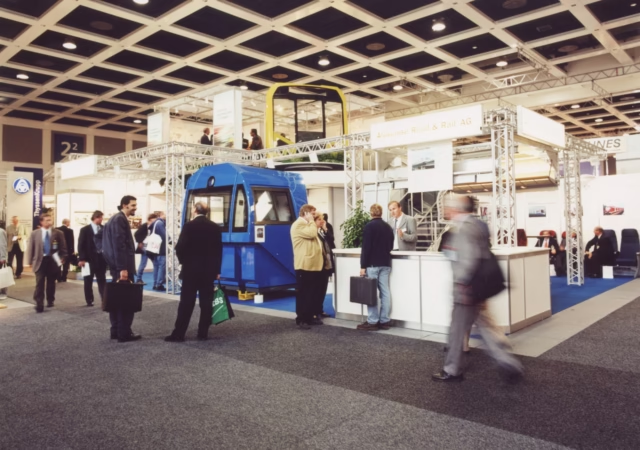
30 years InnoTrans – Swissrail still right in the middle
learn more
- Globally
Railway technology from 1990 to today – Switzerland as a driver of digitalization
learn more
- Safety & automation
- Nationally
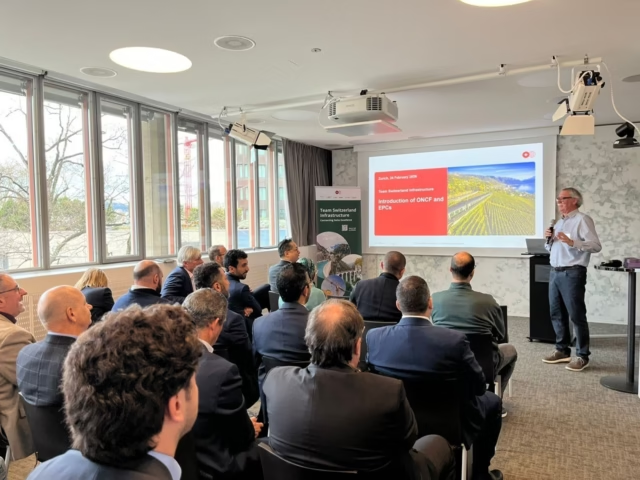
EPC Networking Day II – A successful relaunch
learn more
- Globally